TamilMV Proxy & AI Mirror Generators: 2025 Tech Deep Dive
The digital world is a constant battleground. On one side, content creators and copyright holders fight to protect their intellectual property. On the other, users seek unrestricted access to media, often bypassing geographical and legal barriers. This conflict has never been more intense than it is today, especially with the rapid evolution of technology.
In 2025, this struggle is defined by two powerful forces: the persistent demand for access, symbolized by sites like TamilMV Proxy, and the revolutionary, yet ethically ambiguous, power of AI-Powered Mirror Generators. These technologies are reshaping the landscape of digital content distribution, cyber defense, and content piracy. Understanding this dynamic is crucial for anyone navigating the modern internet.
This in-depth article will explore the complex relationship between these elements. We will look at why sites like TamilMV continue to thrive, how AI is being weaponized by both pirates and protectors, and what this means for the future of online security and content consumption.
The Enduring Challenge of Access: Understanding the TamilMV Proxy Ecosystem
The name TamilMV has become synonymous with the challenge of digital content control. It represents a vast, unauthorized library of South Asian films and media, primarily from the Tamil, Telugu, Malayalam, and Kannada industries. For millions of users, it is a primary source of entertainment.
The site’s existence is a direct challenge to global copyright laws and the multi-billion dollar film industry. This ongoing conflict is the engine that drives the need for sophisticated evasion techniques, which have now entered the age of artificial intelligence.
What is TamilMV and Why Does it Need Proxies?
TamilMV is a notorious torrent website that facilitates the unauthorized sharing of copyrighted material. It is a prime example of a piracy hub that operates in a constant state of flux, perpetually targeted by legal action and government-mandated blockades.
The core reason for its reliance on TamilMV Proxy sites is simple: survival.
The Content and the Copyright Conflict
The content offered by TamilMV is highly sought after, often featuring new releases that are still in theaters or have just become available on paid streaming platforms. This direct infringement on intellectual property rights makes the site a legal target in nearly every country with strong copyright enforcement.
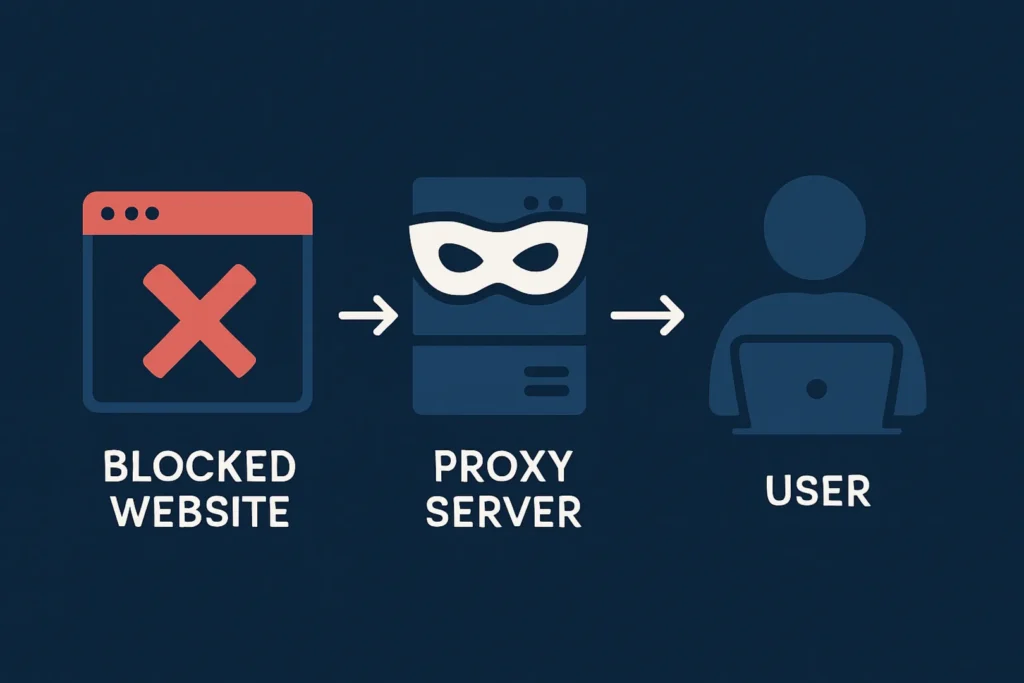
The film industry, through legal channels, successfully pressures Internet Service Providers (ISPs) and governments to block the main domain. This blocking is typically done at the DNS level, making the site inaccessible to the average user.
The Global Blockade: Regional Restrictions and ISP Filters
Geographical restrictions, or geo-blocking, are another layer of the problem. Even legitimate content is often restricted based on a user’s location. For users in regions where content is unavailable or prohibitively expensive, the temptation to seek alternatives is high.
When the main TamilMV domain is blocked, the site’s operators immediately launch a new domain, known as a mirror site or a proxy site. This is a direct, identical copy of the original site, hosted at a different web address. This constant rotation is a necessary tactic to maintain access for their user base.
The Mechanics of Bypassing Blocks: How Proxies and Mirror Sites Work
The terms “proxy” and “mirror” are often used interchangeably in the context of piracy sites, but they have subtle technical differences that are important to understand. Both serve the same ultimate goal: to bypass the block and deliver the content.
Proxy Servers vs. Mirror Sites: A Technical Distinction
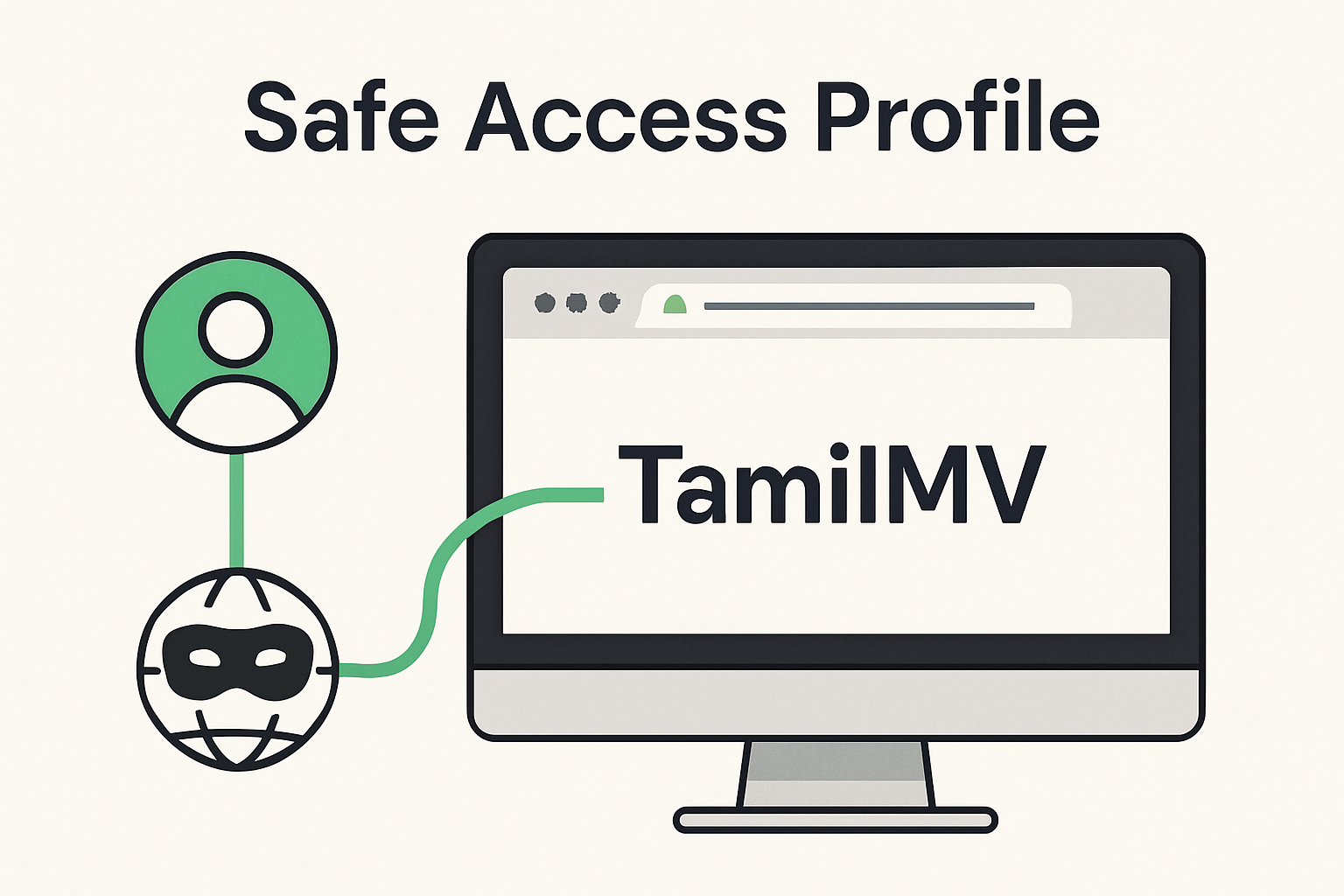
A proxy server acts as an intermediary. When a user tries to access the blocked TamilMV site, they first connect to the proxy server. The proxy then fetches the content from the original, blocked server and delivers it to the user. The user’s computer never directly connects to the blocked site, effectively masking their activity and location.
A mirror site, on the other hand, is a complete, identical copy of the original website. It has its own domain name and is hosted on a separate server. The content is replicated, or “mirrored,” from the original source. For users of TamilMV, the mirror site is functionally the same as the original, providing seamless access to the content library.
The operators of TamilMV primarily rely on a network of mirror sites because they are more resilient to takedowns. If one domain is blocked, they simply direct traffic to the next one in their rotation.
The Cat-and-Mouse Game: Domain Rotation and Takedowns
The process of domain rotation is a continuous, resource-intensive effort. This tactic is also employed by other major piracy hubs, such as those using a tamilrockers proxy to maintain access. As soon as a new mirror site gains traction, it is identified by anti-piracy groups and reported for a takedown. This leads to a cycle: block, report, takedown, and then the launch of a new domain.
This manual process is slow and often reactive. However, the introduction of AI is fundamentally changing this dynamic, transforming a slow, human-driven process into a rapid, automated one. This is where the AI-Powered Mirror Generators enter the picture, accelerating the cat-and-mouse game to an unprecedented speed.
The Legal and Security Risks of Traditional TamilMV Proxy Access
While the allure of free content is strong, accessing sites like TamilMV through proxies and mirrors carries significant risks that users often overlook. For a deeper look into the risks of using public proxy lists, read: KProxy, TamilMV, & Proxy Lists: Safe Access or Risky Waters? These risks fall into two main categories: legal and cybersecurity.
Navigating the Legal Gray Area: Local Copyright Laws
The legality of accessing a piracy site is highly dependent on the user’s location. In many jurisdictions, merely accessing a site may not be illegal, but downloading or streaming copyrighted material without authorization is a violation of copyright law [1].
It is crucial to understand that using a proxy or mirror site does not make an illegal activity legal. It only helps to circumvent a technical block. Users in countries with strict enforcement, such as the United States, the United Kingdom, and several European nations, face the risk of receiving copyright infringement notices, fines, or even legal action.
Hidden Dangers: Malware, Phishing, and Data Privacy
Piracy sites are notorious for being vectors for malware and other cyber threats. This is especially true for mobile users; for more on the specific risks, see: TamilMV Proxy for Android Download: Setup, Risks, & Safe Alternatives. Because they operate outside of legitimate advertising networks and security standards, they are often riddled with malicious code.
- Malware: Pop-up ads and download links on these sites frequently hide trojans, ransomware, or spyware. Users attempting to download a movie may inadvertently install a program that steals their personal data or locks their computer.
- Phishing: Mirror sites can be easily cloned by malicious actors to create fake versions that look identical to the real TamilMV. These phishing sites are designed to steal login credentials, credit card information, or other sensitive data.
- Data Privacy: When using a traditional proxy, the proxy server can see all the user’s traffic. If the proxy is untrustworthy, the user’s browsing history, IP address, and other personal information are exposed and can be sold to third parties.
The need for a more secure, and paradoxically, a more evasive, solution has paved the way for the next generation of technology. This is the point where the digital arms race escalates with the deployment of AI.
The Rise of AI-Powered Mirror Generators: A Dual-Use Technology
The technology used to create TamilMV Proxy sites has undergone a dramatic transformation. What was once a slow, manual process of copying a website and setting up a new domain is now being revolutionized by artificial intelligence. This new technology is known as the AI-Powered Mirror Generator.
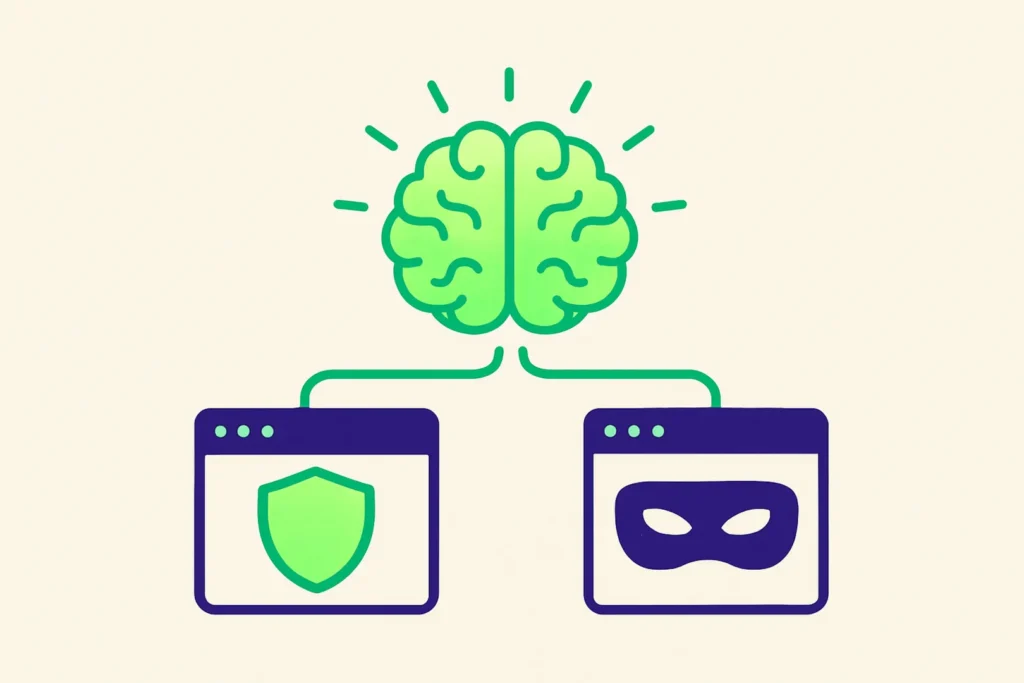
This innovation is a perfect example of a dual-use technology. It can be a powerful tool for good, protecting legitimate businesses from cyber threats. However, it can also be weaponized by sophisticated piracy operations to accelerate their evasion tactics.
Defining the AI-Powered Mirror Link Generator
An AI-Powered Mirror Generator is far more advanced than a simple script that copies a website. It is a sophisticated platform that uses machine learning algorithms to analyze a website’s structure, content, and traffic patterns. It then automatically creates and deploys secure, optimized, and often encrypted replicas of that site.
The Core Innovation: AI-Driven Link and Site Replication
The “AI-powered” aspect means the system is adaptive and intelligent. It does not just make a static copy. Instead, it learns the best way to deploy the mirror based on real-time conditions.
For example, it can analyze which geographical regions are experiencing blocks or high traffic. It then instantly spins up a new mirror site in a location that offers the fastest access and the lowest risk of being taken down. This is a massive leap from the old, reactive methods.
From Manual Setup to Instant, Secure Mirroring
In the past, setting up a new mirror site could take hours or even days of manual work by a technical team. The AI generator reduces this time to mere seconds. This speed is critical in the modern digital landscape, where every minute of downtime can mean lost revenue for a business or lost access for a piracy operation.
The technology also focuses on security. The AI can automatically apply encryption and security protocols to the new mirror link, making it harder for third parties to track or disrupt the connection.
Defensive Applications: Fortifying Websites Against 2025 Cyber Threats
The legitimate, defensive use of this technology is a major trend in cybersecurity for 2025. Companies are using AI-Powered Mirror Generators to build resilience into their online presence.
The press release from STAKE Soft in August 2025 highlighted this positive application [2]. They unveiled a groundbreaking AI-Powered Mirror Link Generator designed to fortify websites against the escalating cyber threats of the year.
Ensuring Business Continuity: DDoS and Failover Protection
One of the biggest threats to any online business is a Distributed Denial of Service (DDoS) attack. In a DDoS attack, a website is flooded with so much fake traffic that it crashes and becomes unavailable to real users.
An AI-Powered Mirror Generator acts as an instant failover system. If the main site comes under attack, the AI immediately redirects all traffic to a network of secure mirror sites. This ensures business continuity, meaning the company can keep operating and serving customers even during a massive cyberattack.
Global Load Balancing and Regional Compliance
For global companies, these generators are also essential for performance and compliance. The AI can intelligently distribute website traffic across multiple servers worldwide. This is called global load balancing. It ensures that a user in Asia gets the fastest possible connection by being served content from a local mirror server.
Furthermore, the AI can help with regional compliance. By hosting a mirror site in a specific country, a company can ensure it meets local data residency laws, which are becoming increasingly strict in 2025.
The Dark Side: AI-Driven Evasion in Content Piracy
The same speed, intelligence, and resilience that protect legitimate businesses are now being adopted by the operators of piracy networks, including those behind the TamilMV Proxy ecosystem. This is the true technological challenge of 2025.
Automating the Takedown Bypass: AI-Powered Domain Rotation
The manual “cat-and-mouse game” of domain rotation is now over. Instead of a human team waiting for a takedown notice, an AI system constantly monitors the status of all its mirror sites.
When the AI detects that a TamilMV mirror site is blocked or has received a takedown notice, it instantly triggers a new sequence. The AI-Powered Mirror Generator automatically:
- Registers a new domain name.
- Copies the entire website content to a new server.
- Updates all internal links and redirects.
- Distributes the new, unblocked link across its network.
This entire process can happen in minutes, making traditional, human-driven anti-piracy efforts almost obsolete. The speed of evasion now matches the speed of the internet itself.
Deep Learning for Detection Evasion: Modifying Pirated Content
The use of AI goes beyond just creating new links. Advanced piracy operations are now using deep learning to modify the pirated content itself to evade detection [3].
Anti-piracy companies use digital watermarking and content fingerprinting to identify stolen videos. However, AI can be trained to slightly alter the video or audio stream—for example, by changing a few pixels or subtly shifting the color palette—in a way that is invisible to the human eye but enough to break the anti-piracy fingerprint. This is a sophisticated form of AI detection evasion that is rapidly becoming the norm in 2025.
The 2025 Tech War: AI vs. AI in Digital Content
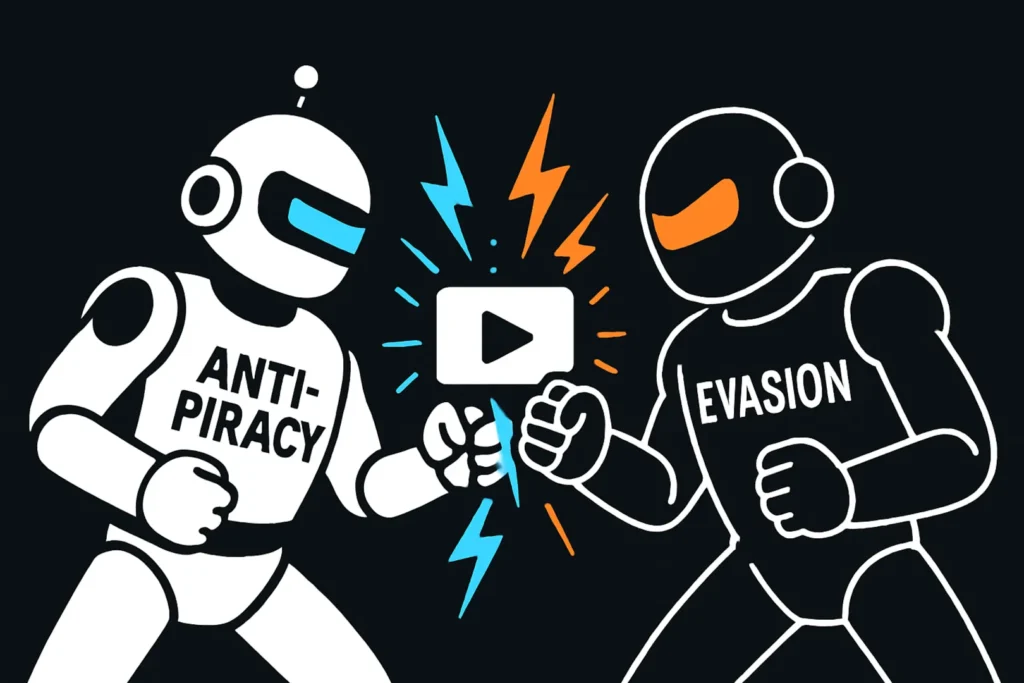
The conflict between content owners and piracy networks has escalated into a full-scale technological arms race. The deployment of AI-Powered Mirror Generators by pirates has forced the anti-piracy industry to respond with its own, equally advanced artificial intelligence solutions. The battle for the future of digital content is now a war of algorithms.
The Anti-Piracy Arsenal: AI-Powered Content Protection
Content protection companies are leveraging AI to fight fire with fire. Their goal is to achieve real-time detection and enforcement that can keep pace with the rapid evasion tactics of the pirates.
Visual-AI and Fingerprinting for Real-Time Detection
The core of the modern anti-piracy strategy is Visual-AI and advanced content fingerprinting. Visual-AI systems are trained on massive datasets of legitimate content. They can scan the internet, including new TamilMV mirror sites, and instantly recognize pirated material, even if it has been slightly modified or re-encoded [4].
These systems look for unique digital signatures, or “fingerprints,” embedded in the video or audio stream. When a match is found, the AI can automatically generate a takedown notice, often within minutes of the content being uploaded. This is a significant improvement over older, manual monitoring methods.
Automated Takedown Notices and Enforcement
The process of issuing takedown notices has also been automated. Once the AI identifies a pirated stream or file, it automatically generates the necessary legal documentation and sends it to the hosting provider, search engine, or domain registrar.
This automation is essential for managing the sheer volume of pirated content. Without it, the anti-piracy teams would be overwhelmed by the thousands of new TamilMV Proxy links and mirror sites created daily by the AI generators.
The New Battleground: AI-Driven Obfuscation and Dark Networks
Piracy networks are not standing still. They are constantly developing new ways to bypass the AI-powered defenses. This has led to a shift in tactics, moving away from easily searchable public sites to more hidden, obfuscated, and decentralized networks.
The Role of LLMs in Generating Obfuscated Pirate Content
Large Language Models (LLMs), the same technology that powers advanced chatbots, are now being used to aid in content piracy. Pirates are using LLMs to generate:
- Obfuscated Descriptions: Creating thousands of unique, keyword-rich descriptions for pirated files that are designed to confuse search engine algorithms and anti-piracy bots.
- Code Words and Slang: Using LLMs to generate new, constantly changing code words and slang terms that are used on dark web forums and encrypted messaging apps to discuss and share TamilMV mirror sites and other pirated content [5].
This makes it incredibly difficult for traditional keyword-based monitoring to track the spread of illegal content.
The Shift to Encrypted and Decentralized Networks
The most significant shift is the move to decentralized and encrypted networks. Piracy is increasingly happening on platforms like Telegram, Discord, and private torrent trackers, which are much harder for anti-piracy bots to penetrate.
Furthermore, some sophisticated operations are experimenting with blockchain and decentralized file-sharing protocols. These systems are designed to be immutable and have no central point of failure, making takedowns nearly impossible. The AI-Powered Mirror Generators are the bridge that connects the content from these dark networks to the public internet, even if only for a short time.
The Economic Impact: Piracy’s $125 Billion Threat by 2028
The stakes in this AI vs. AI war are enormous. Content piracy is not a victimless crime; it has a massive, measurable impact on the global economy.
Video piracy alone is a $75 billion annual problem, and this figure is projected to rise dramatically. By 2028, the annual cost of video piracy is expected to reach $125 billion [6]. This staggering number represents lost revenue for studios, fewer jobs for creators, and reduced investment in new content.
The efficiency and speed of the AI-Powered Mirror Generators are directly contributing to this rise. By ensuring near-perfect uptime and rapid evasion, they are making it easier for piracy networks to operate at a massive scale, thus increasing the economic damage.
| Metric | 2025 Reality | 2028 Projection |
|---|---|---|
| Annual Video Piracy Cost | ~$75 Billion | ~$125 Billion |
| Piracy Evasion Speed | Near-Instant (AI-Driven) | Near-Instant (AI-Driven) |
| Primary Threat | AI-Powered Mirror Generators | Decentralized & Encrypted Networks |
Navigating the Future: Safe Access and Ethical Technology
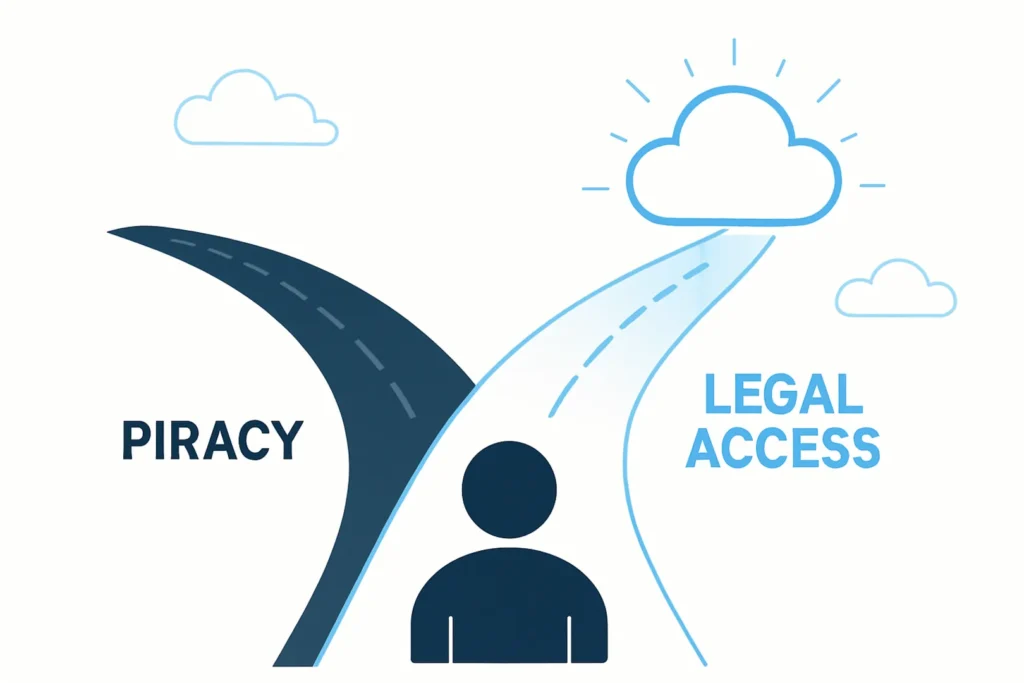
The narrative of TamilMV Proxy and AI-Powered Mirror Generators is a cautionary tale about the double-edged sword of technological progress. While AI offers unprecedented tools for digital defense and business continuity, it also provides sophisticated new weapons for those seeking to circumvent the law. For the average internet user, the key is to understand the risks and choose safe, ethical pathways for digital access.
Best Practices for Safe Digital Access in 2025
In a world where AI-driven threats are constantly evolving, relying on traditional methods to access content is increasingly risky.
The Role of VPNs and Legal Streaming Services
The safest and most reliable way to bypass regional restrictions and access content is through a reputable Virtual Private Network (VPN). A VPN encrypts your entire internet connection, hiding your IP address and location. This allows you to securely access legitimate streaming services that may be geo-blocked in your region.
Furthermore, supporting legal streaming services is the most ethical choice. The rise of platforms offering South Asian content has made it easier than ever to access the movies and shows from the Tamil, Telugu, and other industries legally. This directly supports the creators and the industry.
Identifying and Avoiding Malicious Mirror Sites
Users should be extremely cautious when navigating to any site that promises free, unauthorized content. If a link to a TamilMV mirror site seems suspicious, it likely is.
- Check the URL: Malicious sites often use subtle misspellings of the original domain name.
- Look for Security Indicators: Legitimate sites use HTTPS (indicated by a padlock icon in the browser). While some piracy sites also use HTTPS, its absence is a major red flag.
- Avoid Downloads: Never download executable files or install browser extensions prompted by these sites. They are the most common vectors for malware and spyware.
The Ethical Imperative of AI Mirroring Technology
The creators of powerful technologies like the AI-Powered Mirror Generator have an ethical responsibility to ensure their tools are not easily misused.
Regulation and the Need for Responsible AI Development
As AI becomes more accessible, there is a growing need for clear international regulations that govern its use, particularly in areas that can facilitate illegal activities. Developers must implement safeguards to prevent their AI models from being trained or deployed for purposes that violate copyright or promote cybercrime. The future of the internet depends on the responsible development and deployment of these powerful new tools.
Supporting Creators: The Future of Legal Content Consumption
Ultimately, the most effective long-term solution to content piracy is not technological, but economic and cultural. By making content affordable, accessible, and timely across all regions, the incentive for users to seek out TamilMV Proxy sites diminishes. Supporting creators through legal channels ensures the continued production of high-quality content for everyone to enjoy.
Frequently Asked Questions (FAQ)
Q1: Is using a TamilMV Proxy site illegal?
Using a TamilMV Proxy to access the site itself is generally not illegal, but downloading or streaming copyrighted material without authorization is a violation of copyright law in most jurisdictions. The proxy only helps you bypass a technical block; it does not legalize the act of piracy.
Q2: How does an AI-Powered Mirror Generator work?
An AI-Powered Mirror Generator uses machine learning to analyze a website’s structure and traffic. It then automatically and instantly creates a secure, identical copy (a mirror site) on a new domain. This process is designed to be highly resilient, allowing the site to evade takedown notices and blocks at unprecedented speed.
Q3: What is the difference between a proxy and a mirror site?
A proxy site acts as an intermediary, fetching content from the original, blocked server. A mirror site is a complete, identical copy of the original website, hosted on a separate server and domain. Piracy operations like TamilMV primarily use mirror sites for greater resilience.
Q4: Can AI anti-piracy tools stop AI-driven evasion?
The current landscape is an AI vs. AI arms race. Anti-piracy tools use Visual-AI and content fingerprinting to detect pirated content. However, pirates are using AI to subtly modify the content to evade these fingerprints. The battle is ongoing, with each side constantly developing new, more sophisticated algorithms.
Q5: What are the biggest cyber threats in 2025?
Beyond content piracy, the biggest cyber threats in 2025 include sophisticated AI-driven phishing campaigns, highly evasive ransomware, and massive Distributed Denial of Service (DDoS) attacks. The AI-Powered Mirror Generator is a defensive tool used by legitimate businesses to protect against these threats.
Q6: How can I safely access regional content?
The safest way to access content that is geo-blocked in your region is by using a reputable Virtual Private Network (VPN). A VPN encrypts your connection and allows you to securely connect to legal streaming services that offer the content you are looking for.
Conclusion: The Inevitable Evolution of Digital Access
The story of TamilMV Proxy and AI-Powered Mirror Generators – 2025 Tech is a microcosm of the entire digital world. It is a story of innovation, conflict, and the relentless human desire for access. The traditional cat-and-mouse game has ended, replaced by a high-speed, AI-driven arms race where the speed of evasion is matched only by the speed of detection.
For content creators, the challenge is to embrace new distribution models that make piracy less appealing. For cybersecurity professionals, the imperative is to develop even smarter AI defenses. And for the user, the lesson is clear: the convenience of a free, unauthorized link comes with significant legal and security risks.
The future of digital access is not about finding the next TamilMV mirror site. It is about choosing the path of security, legality, and ethical support for the content that enhances our lives.
Call-to-Action (CTA): Secure your digital life and support the future of content creation. Invest in a trusted VPN and subscribe to legal streaming services today.