The Mystery of Instant Loading: Unpacking the Technology
Imagine this scenario: You click a link for a large file or a high-resolution page, and instead of the usual agonizing wait, the content appears almost instantaneously. It feels like magic, especially when accessing sites like TamilMV, which are often hosted far away or subject to network restrictions. For many users, this near-instantaneous loading is a common, yet puzzling, experience. How can a link, which should theoretically involve a long digital journey across continents, resolve in the blink of an eye?
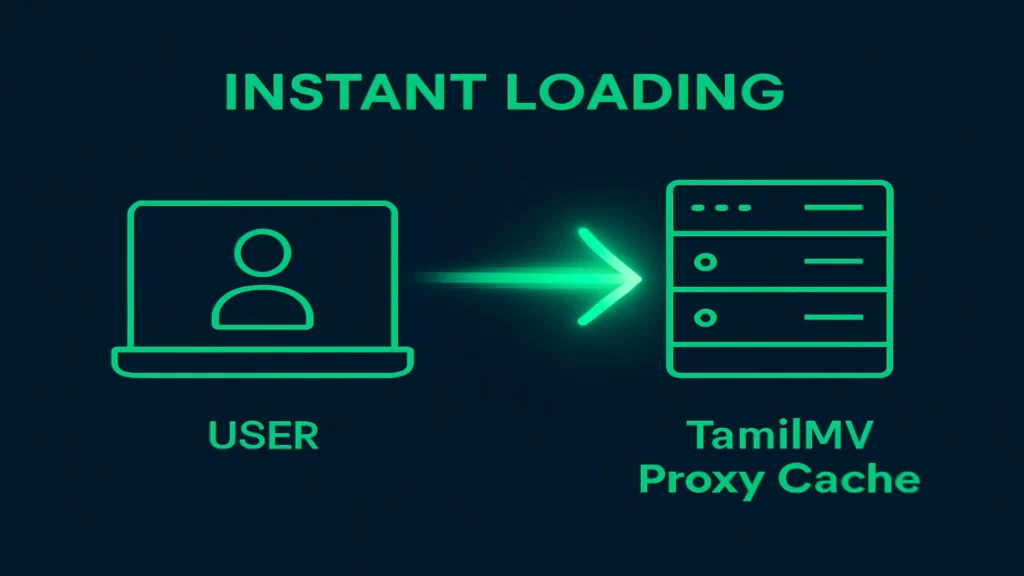
The answer is not magic, but a highly sophisticated and distributed network architecture. The secret lies in the strategic deployment of TamilMV Proxy Cache Servers. These servers are the unsung heroes of speed, leveraging advanced caching and content delivery strategies to drastically reduce the time it takes for data to reach your screen.
This article will take a deep dive into the technical backbone of this phenomenon. We will explore the core concepts of proxy caching, Content Delivery Networks (CDNs), and the critical role of geographical proximity. By the end, you will understand that the speed you experience is the result of a perfectly executed technical maneuver designed for maximum efficiency.
The journey to instant loading involves two primary technical factors: the act of caching the content and the geographical proximity of the server holding that cache. We will break down these elements, examine why some links are fast while others are slow, and discuss the security implications of relying on this network.
The Technical Secret: Understanding Proxy Caching and Latency
To understand why a link loads instantly, we must first understand the role of the intermediary server. In the context of TamilMV, this is not just a simple proxy; it is a specialized caching proxy server.
What is a Proxy Server in the TamilMV Context?
A proxy server acts as a middleman between your device and the internet. When you send a request, it goes to the proxy first, which then forwards the request to the final destination, known as the origin server. The response travels back through the proxy to you.
In the case of TamilMV, this intermediary role serves two crucial purposes. First, it facilitates geo-blocking bypass, allowing users to access content that might be restricted in their region. Many users look for a tamilmv proxy free solution precisely for this reason. Second, and most relevant to our topic, it enables latency reduction through caching.
A standard proxy simply forwards traffic. A caching proxy, however, is equipped with a large, high-speed storage area—the cache—where it temporarily saves copies of the data it retrieves. This distinction is vital to the instant loading experience.
The Mechanics of a “Cache Hit”
The concept of a “cache hit” is the single most important factor in achieving instant loading. Think of the internet as a massive, global library.
If you want a book, you could order it from the main warehouse across the country (the origin server). This takes time.
Alternatively, you could check your local branch (the TamilMV Proxy Cache Server). If the book is already on the shelf, you get it instantly. This is a cache hit.
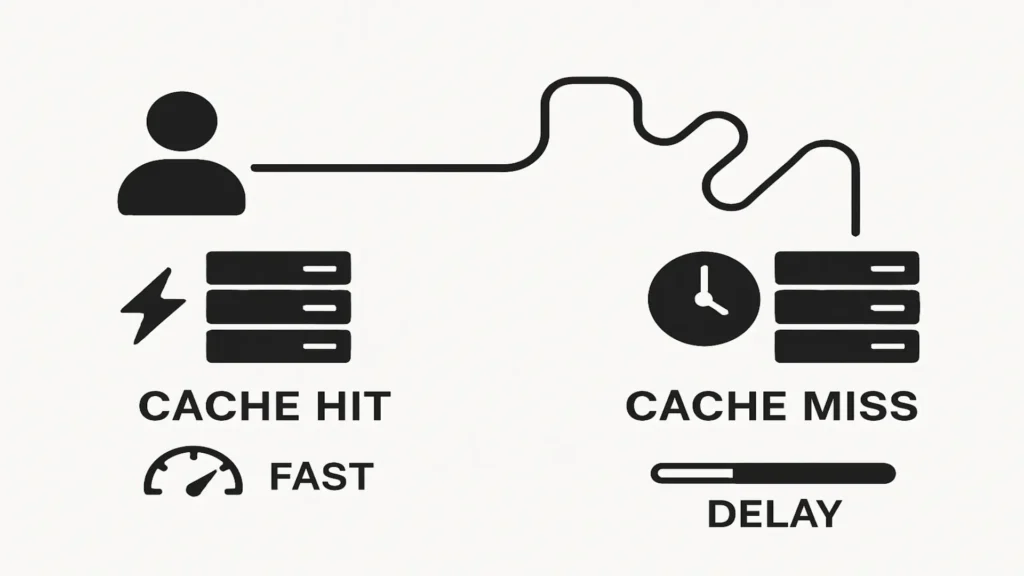
- Cache Hit: This occurs when the data you requested (the link, the page structure, or the initial download segment) is already stored on the local proxy server. The server does not need to communicate with the distant origin server. It simply retrieves the data from its local, high-speed storage and delivers it to you. This process is measured in milliseconds.
- Cache Miss: This happens when the requested data is not in the local cache. The proxy server must then forward your request to the distant origin server, wait for the response, save a copy to its cache, and then send it to you. This involves the full, long-distance round trip, resulting in a noticeable delay—a “slow” load.
The instant loading you experience is a direct result of a successful Cache Hit. The content is already waiting for you on a server that is geographically close.
Visual Suggestion 1: An Infographic illustrating the “Cache Hit” vs. “Cache Miss” process. The “Cache Hit” path should be short and local, while the “Cache Miss” path should be long, involving a trip to the distant Origin Server.
Latency Reduction: The Speed Equation
Latency is the technical term for the delay before a transfer of data begins following an instruction for its transfer. It is often measured as the Round Trip Time (RTT)—the time it takes for a request to go from your computer to the server and back.
The speed of light is the ultimate limit on data transfer. Even at light speed, a request traveling from, say, a user in Chennai to a server in Europe and back will take a significant amount of time—often 150 to 300 milliseconds or more. This delay is noticeable to the human eye.
Proxy caching fundamentally changes this equation. By placing the content on a server closer to the user, the TamilMV Proxy Cache Server eliminates the need for that long-distance round trip.
The latency is reduced to the time it takes for the request to travel to the local proxy and back, plus the time it takes for the proxy to read the data from its local storage. This dramatically lowers the Time to First Byte (TTFB), which is the key metric for perceived loading speed.
Key Takeaway: The physical distance to the main server is effectively replaced by the speed of the local proxy’s cache drive. This is why a link served by a local proxy can load instantly, while a link that requires a trip to the origin server will always have a noticeable delay.
The Role of Content Delivery Networks (CDNs) and Mirror Sites
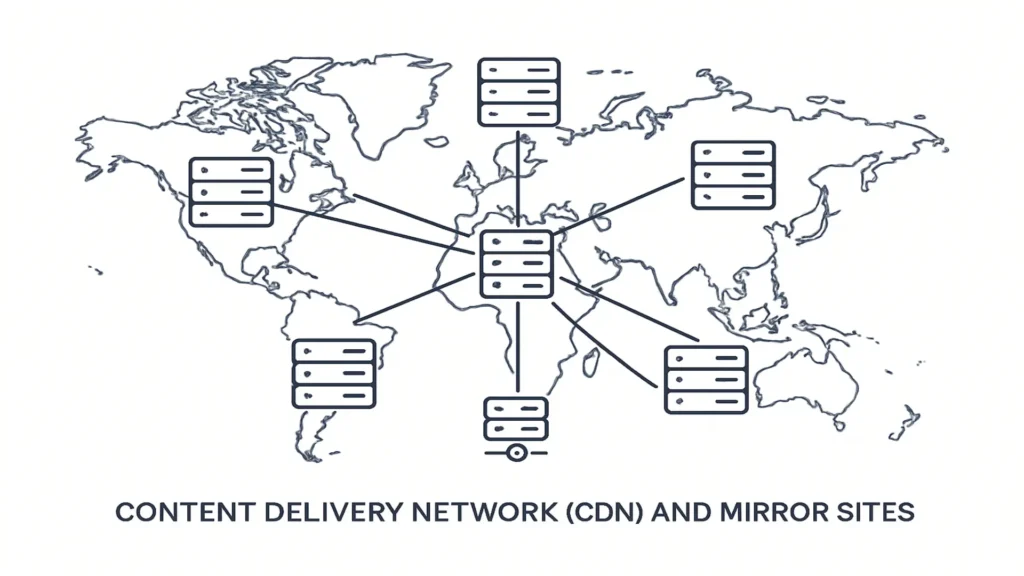
The network of TamilMV Proxy Cache Servers is not a single entity; it is a distributed system that operates much like a commercial Content Delivery Network (CDN). Understanding this architecture is key to grasping the full scope of the instant loading phenomenon.
From Simple Proxy to Global Network
A commercial CDN, such as Cloudflare or Akamai, is a vast, geographically distributed group of servers designed to deliver internet content quickly and reliably. While the TamilMV network may not be a formal commercial CDN, its proxy architecture achieves the same goal: distributing content closer to the end-user.
The network of TamilMV Proxy Cache Servers is essentially a decentralized, ad-hoc CDN. Each proxy acts as a Point of Presence (PoP), caching the most frequently requested content for the users in its immediate geographical area.
This distributed model ensures that even if one proxy server is overloaded or taken offline, users are automatically routed to the next closest available server, maintaining both access and speed. This resilience is a hallmark of a well-designed content delivery system.
Geographical Proximity and Instant Loading
The impact of geographical proximity cannot be overstated. In networking, distance equals delay. The closer the user is to the server, the lower the latency.
The operators of the TamilMV Proxy Cache Servers strategically place these nodes in regions with high user demand. For a user in Mumbai, for example, a proxy server located in a nearby data center will provide a significantly faster experience than one located in Singapore or Frankfurt.
The difference in load time can be stark. A request to a distant server might involve dozens of network hops and cross-continental fiber optic cables. A request to a local proxy might involve only a few hops within the same city or region.
| Scenario | Request Path | Latency (Approx.) | Loading Experience |
|---|---|---|---|
| Cache Hit | User → Local Proxy Cache | 5 – 50 ms | Instantaneous |
| Cache Miss | User → Local Proxy → Origin Server → Local Proxy → User | 150 – 500 ms | Noticeable Delay |
This table clearly illustrates why the “instant loading” is tied directly to the success of the local cache. The latency reduction achieved by the local proxy is the core value proposition of the entire distributed network.
The Architecture of Mirror Sites
The concept of a “mirror site” is closely related to the proxy network. Many of the links you click on TamilMV are not pointing to the single, original server, but to one of many Mirror Sites or “mirror proxies.”
These mirror sites are essentially full, synchronized copies of the main site’s data. They are constantly updated to ensure content freshness, but the delivery of that content is handled locally by the distributed network.
The mirror site architecture, which is also a core component for popular alternatives like the tamilrockers new link, ensures two things:
- High Availability: If the main site is blocked or suffers a technical failure, the mirror sites remain operational.
- Scalability: The load is distributed across dozens, if not hundreds, of servers, allowing the network to handle massive numbers of simultaneous users without performance degradation.
When a link loads instantly, it is highly likely that the content is being served from a mirror site that is acting as a local TamilMV Proxy Cache Server for your region.
Why Not All TamilMV Links Load Instantly: The Stale Content Problem
If the proxy network is so efficient, why do some links still load slowly? This is where the complexities of caching management come into play. The instant loading experience is not guaranteed for every click, and the exceptions help us understand the limitations of the technology.
Cache Expiration and Time-to-Live (TTL)
Cached content cannot remain on the proxy server indefinitely. Data on the internet is constantly changing, and the proxy must ensure it is serving the most up-to-date version of a page or file. This is managed by a setting called Time-to-Live (TTL).
TTL is a value assigned to cached content that dictates how long the content is considered “fresh” or valid.
- When a link is first cached, it is assigned a TTL (e.g., 24 hours).
- During that 24-hour window, any user request results in an instant Cache Hit.
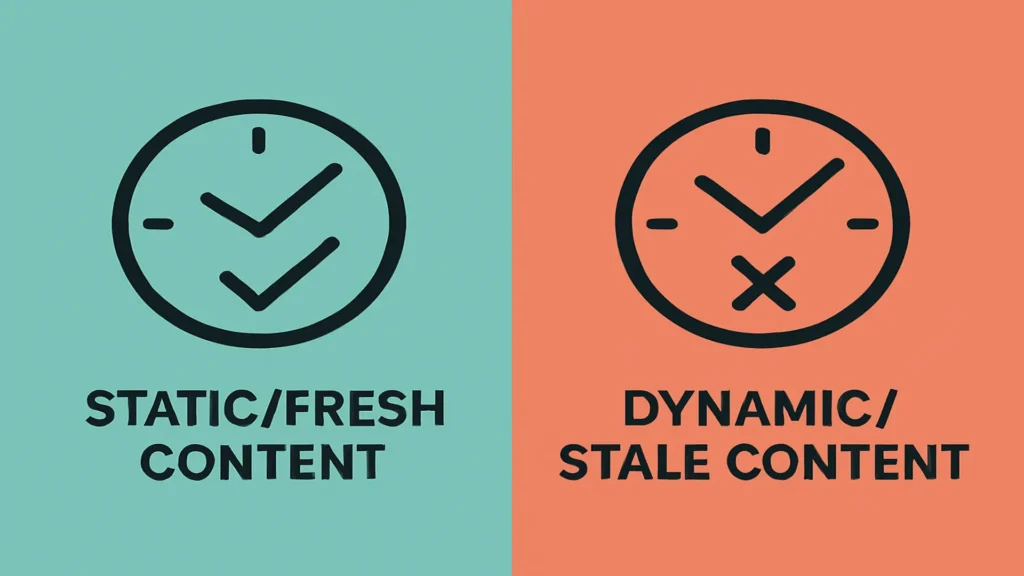
- Once the TTL expires, the content is considered stale. The next user request for that link will force the proxy to perform a re-validation check with the origin server.
This re-validation check causes a slight delay—the “slow” load you sometimes experience. The proxy is essentially asking the origin server, “Has this file changed since I last checked?” If the answer is “No,” the proxy resets the TTL and serves the content. If the answer is “Yes,” the proxy downloads the new content, updates its cache, and then serves it to the user.
Dynamic vs. Static Content
The type of content being requested is another major determinant of loading speed. Caching works best for content that rarely changes.
| Content Type | Description | Caching Behavior | Loading Speed |
|---|---|---|---|
| Static Content | Site logos, CSS files, JavaScript libraries, old movie links, archived pages. | Cached for a long time (long TTL). | Instantaneous (High Cache Hit Rate) |
| Dynamic Content | Newly added links, live user comments, site search results, personalized content. | Cannot be cached or has a very short TTL (e.g., 5 minutes). | Slower (High Cache Miss Rate) |
Static Content is the bread and butter of the instant loading experience. Once a proxy has a copy of the site’s main structure or a popular, older link, it can serve it repeatedly without contacting the origin.
Dynamic Content, such as a link to a movie that was just added an hour ago, is a different story. Since the content is new, no proxy has a copy yet, resulting in a guaranteed Cache Miss and a slower initial load. This is a necessary trade-off to ensure users receive the freshest data.
The Impact of HTTPS and Encryption
Modern web traffic is overwhelmingly encrypted using HTTPS (Hypertext Transfer Protocol Secure). While this is excellent for security and privacy, it introduces a challenge for caching.
HTTPS encrypts the entire communication channel between the user and the server. A proxy server cannot simply read the encrypted data and cache it without decrypting it first.
In a reverse proxy setup, the TamilMV Proxy Cache Server often has to terminate the SSL connection. This means the proxy decrypts the traffic, inspects the request, checks its cache, and then re-encrypts the response before sending it back to the user. This decryption and re-encryption process adds a small but measurable amount of processing overhead.
While this overhead is minimal, it can be the difference between a 20-millisecond load and a 50-millisecond load. For links that are not fully optimized for this SSL termination process, the load time can be slightly slower than a purely unencrypted connection (which are now rare and insecure).
User Benefits and Security Considerations
The primary benefit of the TamilMV Proxy Cache Servers is speed, but the distributed architecture provides several other advantages that contribute to a better user experience and network stability.
Beyond Speed: Bandwidth and Server Load
The caching network is a massive efficiency tool for the entire system.
- Bandwidth Savings: Every time a user gets a Cache Hit, the proxy network saves bandwidth. The data does not have to travel the long, expensive route from the origin server. This is a significant cost saving for the operators and reduces network congestion globally.
- Server Load Management: The proxy network acts as a powerful load balancer. By serving the vast majority of requests from the local cache, the proxies offload traffic from the central Origin Server. This prevents the origin server from being overwhelmed by millions of simultaneous requests, ensuring its stability and longevity.
Without this distributed caching and load balancing, the main TamilMV site would likely crash under heavy traffic, making access slow or impossible for everyone. The instant loading is a side effect of a system designed for high availability and scalability. This same principle of using a distributed network for performance and access applies to other platforms as well, such as the ongoing competition between TamilMV and the tamilblasters proxy 2025 network.
The Security Trade-Off
While the proxy network offers convenience and speed, users must be aware of the security implications.
- Anonymity: Proxies provide a layer of anonymity by masking the user’s true IP address from the origin server. The origin server only sees the IP address of the proxy.
- Security Risks: The main risk comes from using unverified or low-quality proxy links. A malicious proxy operator could potentially:
- Log Data: Record all your browsing activity and IP address.
- Man-in-the-Middle Attacks: Inject malicious code or advertisements into the content before it reaches your browser.
It is crucial to use only trusted and verified TamilMV Proxy Cache Servers to mitigate these risks. The speed benefit is only worthwhile if your security is not compromised.
The Future of High-Speed Content Delivery
The technology that makes TamilMV links load instantly is constantly evolving. The future of content delivery is moving toward making this “instant” experience the universal norm.
Emerging technologies like Edge Computing and the QUIC protocol are pushing content even closer to the user. Edge computing places processing power and caching capabilities at the very edge of the network, often in local internet service provider (ISP) hubs. QUIC, a new transport layer protocol developed by Google, is designed to reduce connection establishment latency and improve congestion control, making the initial connection even faster than current TCP/IP standards.
As these technologies mature, the distinction between a “fast” link and a “slow” link will blur, and the instant loading experience will become the expected standard for all web content.
Frequently Asked Questions (FAQ)
This section addresses common user questions regarding TamilMV Proxy Cache Servers and the instant loading phenomenon.
Q1: What is the difference between a TamilMV proxy and a VPN?
A TamilMV Proxy Cache Server acts at the application layer (Layer 7), primarily to cache content and bypass geo-restrictions for a specific website. A VPN (Virtual Private Network) operates at the network layer (Layer 3), encrypting all your internet traffic and routing it through a secure tunnel. A proxy is faster for the specific cached content, while a VPN provides comprehensive security and privacy for all online activity.
Q2: Does using a TamilMV Proxy Cache Server save me bandwidth?
Yes, indirectly. While the proxy uses its own bandwidth to fetch the content from the origin server, the user’s local network often benefits. By serving content from a local cache, the proxy reduces the data transfer distance, which can lead to more efficient use of your local ISP’s bandwidth and potentially faster overall speeds.
Q3: Why do new movie links on TamilMV always load slower than old ones?
New links are considered dynamic content and have not yet been cached by the TamilMV Proxy Cache Servers. When you click a new link, it results in a Cache Miss, forcing the proxy to perform a full request to the distant Origin Server. Older, more popular links are static content that are already stored in the local cache, leading to an instant Cache Hit.
Q4: Is it safe to use any random TamilMV Proxy link I find online?
No. Using unverified proxy links is highly risky. A malicious proxy can log your data, inject malware, or serve you compromised content. Always use proxies from trusted sources or official mirror lists to ensure your security and privacy are maintained.
Q5: How can I check if a link is loading from the cache or the origin server?
For the average user, the easiest way is by observing the load time. An instant load (under 100ms) strongly suggests a Cache Hit. Technically, you can use browser developer tools (Network tab) to inspect the HTTP headers. A header like X-Cache: HIT or Age: [seconds] confirms the content was served from a cache.
Q6: What is “stale content” in the context of proxy caching?
Stale content is data stored in the TamilMV Proxy Cache Server that has exceeded its designated Time-to-Live (TTL). The content is still physically on the proxy, but the proxy cannot serve it until it re-validates with the Origin Server to ensure it is still the most current version.
Q7: What is the “Origin Server” for TamilMV?
The Origin Server is the single, central server where the original, master copy of the TamilMV website and its data is hosted. It is the authoritative source for all content. The TamilMV Proxy Cache Servers and mirror sites exist solely to reduce the load on this origin server and speed up content delivery to users globally.
Conclusion: The Engineering Behind the Speed
The phenomenon of TamilMV Proxy Cache Servers providing instant loading links is a powerful demonstration of modern network engineering. It is not an accident or a fluke; it is the calculated result of a distributed architecture designed for speed, scalability, and resilience.
The instant load is achieved through a successful Cache Hit, where the content is served from a local server, bypassing the high latency of a long-distance connection to the Origin Server. This network, functioning as a decentralized Content Delivery Network, ensures that the physical distance between you and the content is minimized.
Understanding this technology demystifies the experience. The speed you enjoy is a testament to the efficiency of caching, the power of geographical proximity, and the strategic deployment of mirror sites. While the network offers immense convenience, users must remain vigilant about security, ensuring they only connect through verified and trusted proxy links.
Final Key Takeaway: The speed of TamilMV Proxy Cache Servers is not magic; it is the result of a perfectly executed “Cache Hit” that transforms a global request into a local one.
Call-to-Action (CTA)
To continue exploring the technical backbone of the internet and content delivery, and to stay informed about the latest in network security and content access, subscribe to our newsletter for more in-depth analyses and exclusive technical guides.